Methodology

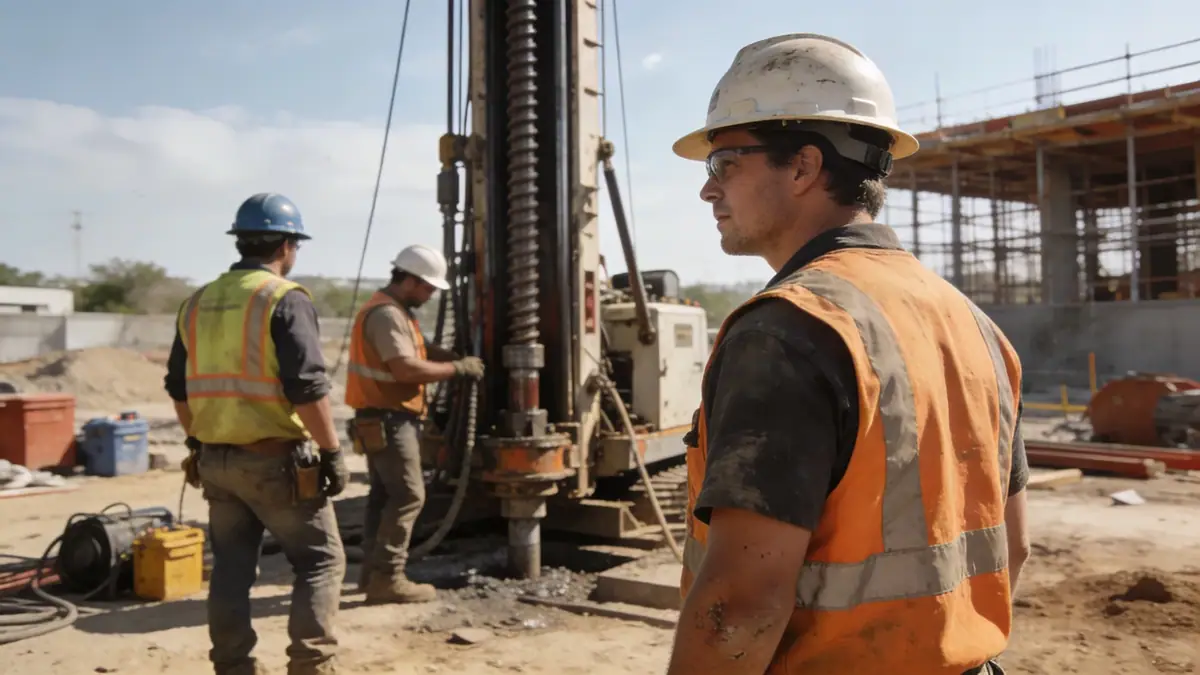
Our methodology for geotechnical investigations in Coffs Harbour follows a systematic approach aligned with Australian standards. We begin with a thorough desk study of regional geology and existing borehole records, then conduct field programs including spt boring with standard penetration tests (SPT) per AS 1289.6.3.1. Soil samples are retrieved for laboratory classification and strength testing, such as triaxial compression (AS 1289.6.4.1) and direct shear (AS 1289.6.2.2). Groundwater monitoring wells are installed where perched water tables are anticipated. Data analysis employs probabilistic methods to characterize soil variability and define design parameters for shallow and deep foundations, retaining walls, and slope stability assessments. All work is documented in a detailed geotechnical report suitable for regulatory submission.
Reference Technical Parameters
| Parameter | Reference Value |
|---|---|
| Predominant soil type | Coastal sands and stiff clays (Pleistocene alluvium) |
| Typical groundwater depth | 1.5–4.0 m below ground surface |
| Bedrock depth | 10–25 m (weathered metasediments) |
| Typical N60 range (SPT) | 8–25 blows/300mm (sands), 10–40 blows/300mm (clays) |
| Seismic hazard (PGA) | 0.08 g for 500-year return period (AS 1170.4) |
Local Considerations — Coffs Harbour
Coffs Harbour's coastal geology features Quaternary alluvial deposits overlying weathered metasedimentary bedrock. Perched water tables are common in low-lying areas, requiring dewatering measures for excavations. Expansive clay soils in the hinterland can cause differential foundation movement. The region is classified as seismic Zone A under AS 1170.4, with peak ground acceleration of 0.08 g. Our team applies local experience to address these conditions, and our hub operations in geotechnical engineering en Brisbane provide additional support for complex projects. We also offer specialized slope stability analyses for hillside developments typical of the area.
Request a Quote
Our team reviews your project and issues an initial report at no cost.
Or write us directly at [email protected]
Services in Coffs Harbour
Applicable Standards
- AS 1170.4 (Structural design actions – Earthquake actions)
- AS 1289 series (Methods of testing soils for engineering purposes)
- AS 1726 (Geotechnical site investigations)
- AS 4678 (Earth retaining structures)
- National Construction Code (NCC) 2022
Frequently Asked Questions
What types of soil are commonly found in Coffs Harbour?
The predominant soils are coastal sands and stiff clays derived from alluvial and estuarine deposits. In the hinterland, residual clay soils overlying weathered metasediments are common, with variable strength and shrink-swell potential.
Is a geotechnical investigation required for residential construction in Coffs Harbour?
While not always mandatory for single dwellings, a site investigation is strongly recommended due to variable soil conditions. Council may require a geotechnical report for subdivisions, retaining walls, or sites with steep slopes or known fill.
What seismic design considerations apply in Coffs Harbour?
Coffs Harbour is in seismic Zone A under AS 1170.4, with a design PGA of 0.08 g for a 500-year return period. Site classification (A to E) based on soil stiffness affects the acceleration response spectrum used in structural design.