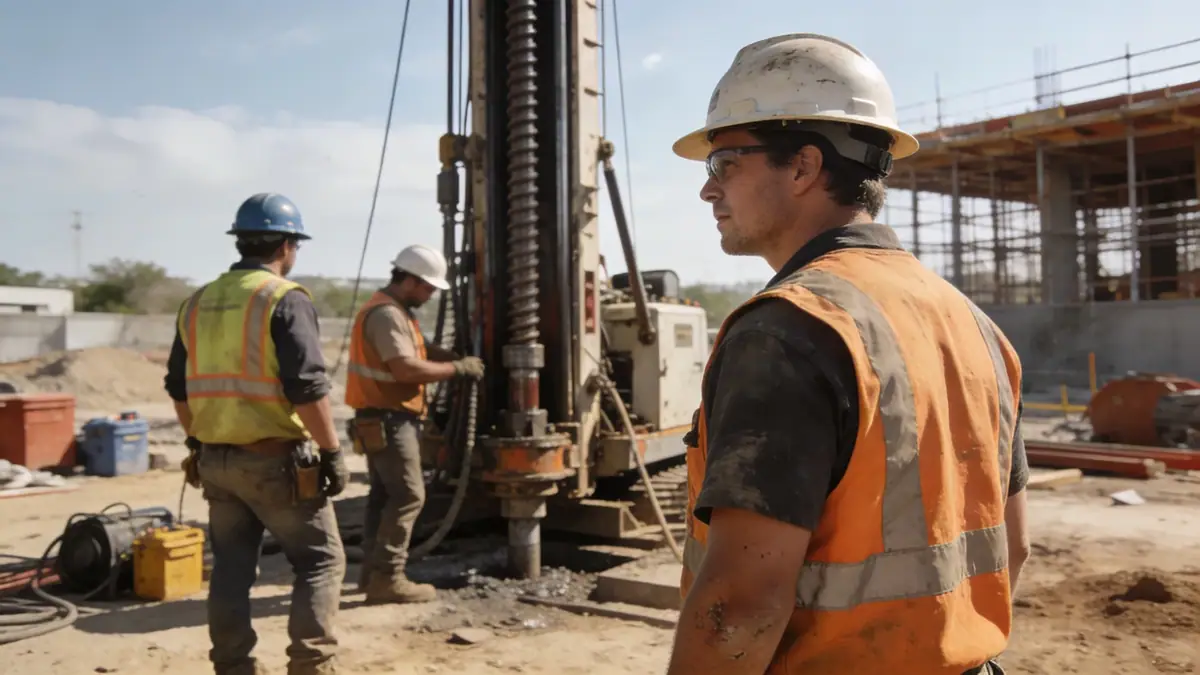
Methodology
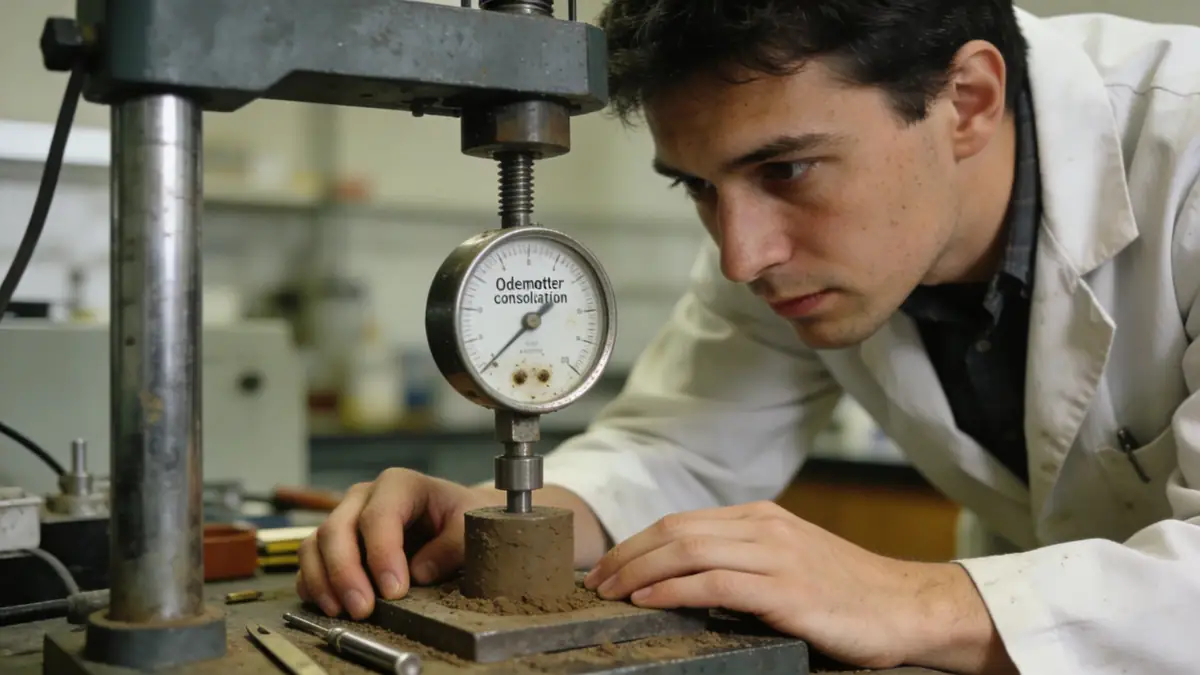
Our methodology for geotechnical engineering in Brisbane integrates field investigations and laboratory testing to characterize subsurface conditions. We employ standard penetration tests (SPT) as per ASTM D1586, with sampling intervals every 1.0 to 1.5 meters, typically reaching depths of 8 to 15 meters for residential projects and up to 30 meters for industrial sites. Cone penetration testing (CPT) provides continuous profiles at 1 to 2 cm intervals. Our spt boring services are complemented by test pits to 3 meters depth and advanced laboratory analyses for accurate parameter determination.
Reference Technical Parameters
| Parameter | Reference Value |
|---|---|
| Predominant soil type | Clayey sands and silts, with some gravel layers |
| Maximum seismic acceleration (PGA) | 0.10g to 0.15g (AS 1170.4) |
| Typical groundwater level | 2 to 6 meters below surface |
| Bedrock depth | 10 to 30 meters (variable) |
| Typical N60 range (SPT) | 5 to 30 blows per 300mm |
Local Considerations — Brisbane
Brisbane's geology is dominated by Quaternary alluvial sediments and weathered rock of the Neranleigh-Fernvale beds, resulting in variable soil profiles. The city lies in a low to moderate seismic zone (AS 1170.4), with peak ground accelerations up to 0.15g. Groundwater levels can be shallow near the Brisbane River, requiring dewatering considerations. Our team evaluates soil behavior under seismic loading, using soil mechanics laboratory tests to assess liquefaction potential. Typical projects include high-rise foundations in the CBD and slope stability in hilly suburbs like Mount Coot-tha.
Request a Quote
Our team reviews your project and issues an initial report at no cost.
Or write us directly at [email protected]
Services in Brisbane
Locations covered in Brisbane
Applicable Standards
- AS 1170.4 (Earthquake actions)
- AS 1726 (Geotechnical site investigations)
- ASTM D1586 (Standard penetration test)
- BS 5930 (Site investigation)
Frequently Asked Questions
What are the typical soil types encountered in Brisbane?
Brisbane soils vary from clayey sands and silts in alluvial areas to residual soils over weathered rock. The Neranleigh-Fernvale beds yield stiff clays and weak rock, while coastal areas may have soft estuarine deposits. Understanding these variations is critical for foundation design.
Is seismic design required for buildings in Brisbane?
Yes, AS 1170.4 mandates seismic design for most structures in Brisbane, with peak ground accelerations of 0.10g to 0.15g. Site-specific geotechnical investigations are required to determine soil classification and potential amplification effects, especially on soft soils.
Are geotechnical investigations mandatory for residential construction in Brisbane?
While not always mandatory for all residential projects, geotechnical investigations are strongly recommended by the Brisbane City Council and are often required for sites with reactive soils, steep slopes, or fill. They help avoid costly structural failures and ensure compliance with the National Construction Code.